



This episode was recorded on August 22, 2025.
About This Episode
Today’s episode is one that goes back to a core motivation for starting this podcast in the first place. One of the reasons I love housing is because it is so complex. Never in a million years could someone be a true expert on the full housing system, in part because there will always be new wrinkles. This doesn’t mean it can’t be a goal to learn as much as possible about all the corners of housing, and this podcast has always been about giving me as the host and you as the listener a chance to dig deeper into a part of housing you may be aware of but don’t fully grasp.
Our focus here is on the growing connection between the health system and housing, in particular, creative ways in which housing and social services agencies are using healthcare dollars and programs to provide housing services and improve housing outcomes. This isn’t just housing as healthcare. It’s a recognition by the healthcare system of how our systems can and must become better linked.
My guests today are two leaders from the North Bay whose organizations have helped pushed this work forward. Chris Cabral is the CEO of COTS, an organization that has worked with people facing homelessness in Sonoma County for more than 35 years. Erin Hawkins is the VP of Programs for Community Action Marin, an organization who has been working to support often invisible low income people in one of the wealthiest communities in America since the Johnson Administration. It’s an honor to have them both here on the show, and to reflect on their work in a part of the Bay Area that means so much to me personally.
I hope you enjoy today’s show, which also marks the end of the brilliant tenure of Tina Lee as our editor and my partner in crime on this podcast. After 24 fantastic episodes, we’re going to take a pause for a bit to figure out a pathway to a more sustainable podcast future and focus in the meantime on getting words on paper the old fashioned way.
Thanks for tuning in, and thanks to all of you who’ve subscribed, paid money, given likes or otherwise supported the show.
This Episode’s Guest
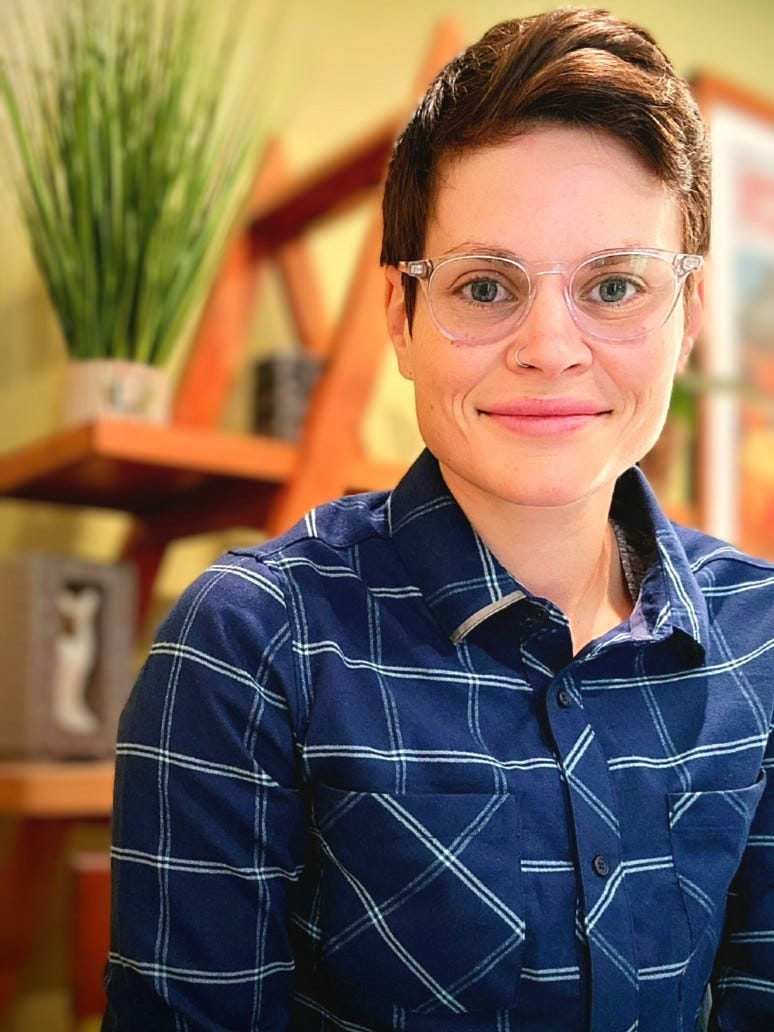
Chris Cabral is the CEO of Committee on the Shelterless (COTS). Chris Cabral also worked as the Chief Operating Officer for Nation’s Finest. With more than fifteen years’ experience in the public and nonprofit sectors, Chris brings a wealth of knowledge in homeless services and affordable housing development. Chris is the Board Chair for the Providence Community Benefit Board in Northern CA, and a member of the Executive Board for Providence and Healdsburg hospitals. In addition, Chris serves on the County Homeless Coalition Board, as well as serving as the Board President for Trips for Kids, and as a board member for Legal Aid of Marin.
Chris holds a B.A. from Golden Gate University in Accounting and Business/Management and a J.D. from Golden Gate University School of Law. She is currently pursuing a Master of Science in Accounting from Dominican University.
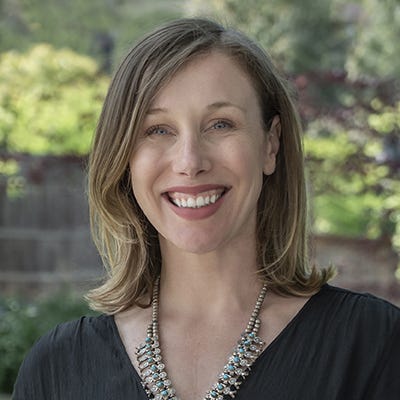
Erin Hawkins is the Vice President, Whole Family & Community Services at Community Action Marin. Erin brings 15 years of experience working in non-profits and local government designing, building and sustaining programs and services within community. In addition to her programmatic experience, Erin is a skilled trainer and facilitator. She is a member of the national Complex Trauma Training Consortium and leads workshops and conferences across California to build individual and organization capacity to implement trauma-responsive and healing centered practices in order to improve health outcomes for people and communities. Erin is also a proud and active member of the COTS Board of Directors and has been deeply involved in outreach and advocacy for and with the North Bay’s unhoused community for nearly a decade.
Erin received her Bachelor of Arts in International Development from UC Berkeley and her Master of Science in Community Development from UC Davis.
Interview Transcript
Alex Schafran: Chris Cabral, Erin Hawkins, welcome to Housing After Dark. It’s wonderful to have you.
Erin Hawkins: Thank you, it’s great to be here.
Chris Cabral: Yeah, great to be here.
Alex Schafran: So as you know, from tradition, we start with every guest’s journey into housing. Erin, we’re going to start with you. So how did you find yourself in this housing world?
Erin Hawkins: Well, it’s not a particularly exciting story. I’ve always known, since I was little, that I was going to be a helper. It was never not an option on a cellular level to not. But what that looked like was kind of always unknown to me. After college, one of my first or second jobs was working as a grant writer for a community development financial institution, which I had no idea what that was when I took the job, but I knew they helped people, and I was going to help people.
Alex Schafran: We have some great, great CDFI listeners here.
Erin Hawkins: Beautiful! Well, it was Northern California Community Loan Fund, I think they’ve since changed their name and kind of rebranded, but that was my first introduction to thinking about housing as a health intervention, and housing and public health. Public health had been my area of focus in college, and through that work, I got to meet folks and communities that were developing all kinds of different housing projects and programs, whether it was actual bricks and mortar development, or it was helping renovate existing buildings or renovate buildings for other housing nonprofits.
It was this deeply inspiring experience. Since then, I’ve been working with people for whom lack of safe housing, lack of affordable housing, has been an impetus for them to end up in an emergency room or kids ending up at a residential center or in the foster care system.
And now at Community Action Marin, our job is to focus on the greatest needs of the community. It’s quite literally written into the mission and vision and origin stories of community action agencies. And in Marin County, housing, lack of affordable housing options, is by far and away the biggest need and issue in the community, so it continues to be a leading area of focus for myself and my team.
Alex Schafran: Thanks so much. Chris, tell us about your story, how did you end up as a houser?
Chris Cabral: Oh, sure, I would love to. Like Erin, I kind of always knew that I was here to help people when I was young. I grew up in very rural Ohio, we didn’t have money to send me off to a fancy school or anything. So I joined the military. I was active duty in the Coast Guard, and I ended up getting stationed out here in California, in Petaluma. It’s a big training base, and I loved it. I was there for four years. I knew that I didn’t want to keep moving around the country, but I still wanted to do something to help the people and to serve the community.
There’s a great sense of purpose in the work that you do in the military, and I wanted to continue to feel that same level of purpose in whatever career path I went down. Out here in California, you know, homelessness and affordable housing is a very, very visible issue, and it’s something that I was really passionate about. These are human beings that need the help and the support of the broader community to get on their feet and have access to housing and health care that they deserve. So that’s kind of the path that I went down. I started working for an affordable housing developer when I was pretty young. From there, I really got interested in homelessness, affordable housing development. I moved over to another nonprofit that serves homeless veterans within the western United States and moved up the ranks there to Chief Operating Officer and loved it.
From there moved over to the Committee on the Shelter List, which we call COTS for an acronym. That’s how everybody knows us. I am now the CEO for COTS, and we are a homeless services organization, housing provider serving Sonoma County and a little bit of Marin. We are one of the largest providers up here in the North Bay. And I am very happy and honored to do this work every day.
Alex Schafran: Well. Thank you so much to both of you for being here. This is a special episode for me. I mean, they’re all special, but it’s particularly meaningful that this is the 415, and the 707, getting together. This is our second Marin County or Marin/Sonoma episode.
We had a fantastic episode with Paul from Homeward Bound, and I’m really excited to be able to highlight some of the issues and some of the really good work happening. Maybe we can dedicate this, Chris, I know you’re gonna be stuck in the traffic on the Narrows, so this is dedicated to all those folks stuck in traffic, partly because Marin County doesn’t build enough housing. Many of the people that are in traffic with you have to do with Marin’s lack of housing development to date.
But really great to have both of you and have both of your organizations here. This is also an exciting episode, because one of the reasons why I decided to do this podcast was, rather than annoy my colleagues and friends who knew more about certain key housing issues that I did and get them to just sort of teach me. I figured, well, why don’t we put this on the air?
And so this issue that we’re talking about today, which is this link between housing and health care, and in particular, between health care institutions and health care dollars and helping people stay housed, is one that has been growing. You hear about it kind of everywhere now in the housing space, and it’s one that I fundamentally still am trying to understand. And so we’re going to do a little bit of a 101, starting with Erin, to kind of help us understand more about what this issue is, what CalAIM is, the program we’re going to be talking about today, or at least how it connects to housing. And then we’ll get into Community Action Marin’s (CAM) relationships and experience in this, we’ll get into COTS’s relationship, and we’ll go from there.
So Erin, give us a little bit of understanding. How does this CalAIM program help people in housing? What is the connection in California between healthcare dollars and housing?
Erin Hawkins: Yeah, I’m going to start by saying, if you’ve ever worked in any way social services, in housing, in health. We often talk about doing things upstream, right? You want to take care of the issue before it really becomes an issue. You want to keep people housed. Beyond being, I would say, a social/moral imperative, it’s also cost effective, because people who are in safe affordable housing have much better health outcomes. They are much less frequently ending up in the emergency room with health-related issues that had they been in a safe affordable housing, a safe affordable community. They probably would have had a really expensive and really undignified experience in an emergency room.
Chris can tell you more about this. I’ve known COTS for a long time; I was a board member there for several years. People will utilize emergency rooms to find a safe, warm bed and a meal, all the way up to people who have major medical issues and have been living outside in the elements, and that is not good for our bodies. It’s not good for our health. Long story short, it’s kind of this ideal goal is, how do we get upstream? How do we get preventative? How do we do system level change? To me, CalAIM is just that. CalAIM was launched by the Department of Health Care Services, the California Medicaid system in 2022 it actually stands for California Advancing and Innovating MediCal. That’s what the acronym is for.
So in 2022 it was launched, and the goal really was to identify individuals who have the highest needs and the highest risks and end up being the most expensive MediCal clients for the state of California, they have the highest cost of health care needs. It was a recognition of the fact that California’s medical system is very disjointed, it’s not a smoothly operating machine. And as a result, they were not seeing the health outcomes at the level they wanted to see. So that was really what CalAIM was designed to do, was to find those folks streamline the operations and improve health outcomes. And one of the key ways to do that was and what’s really exciting for folks in the public health field was it took dollars that had historically been utilized to do what we classically think of as healthcare services, like being in a doctor’s office, getting a medical service. It took some of those dollars and allocated them to those upstream interventions, like housing.
The actual initiative itself is made up of just over a dozen different types of initiatives, but the one Chris and I have been involved in, and that we’re going to focus on today, are two of them. One is called Community Supports, and one is called Enhanced Care Management. And what those allow us to do is they allow us to work really closely with individuals that we know they have MediCal they have a housing need, they are unhoused and they usually have an additional need, a medical need, a substance use, need a mental health need, some other continuing factor beyond just the need for housing.
And we are able to line up beside them with something called enhanced care management, it’s essentially really supportive case management. Amy Anderson at Aliados Health, who’s a partner of all of ours and doing this CalAIM work, will often say it’s like having the best assistant for your life. The person who makes sure you make your medical appointments and helps make sure you get transportation to that appointment and “Oh, the doctor recommended you eat this kind of food or take this medication. Do you understand what that means? Do you want me to come with you to the doctor’s appointment, and we can talk about it. Do you need help finding housing?” You need help finding these other things that make it possible to retain your housing and improve your health.
And then community supports are these additional non-medical services that folks can qualify for, and that can be things like deposits for folks to be able to access housing. It could be things like medically tailored meals. It can be asthma remediation, depending on what the need is, and it allows us, as local community-based organizations, to be reimbursed by the State of California for doing that work. So, it’s also a way for agencies like ours that are reliant on grant funding or local county contracts that, let’s be honest, really don’t cover the full cost of operating a nonprofit agency. Those dollars are allowing us to stay full and to do high quality work. So that’s the very high-level nickel and dime tour of CalAIM.
I’ve got a couple stats on how many folks it served. I’ve got these data through December 31 2024 that just came out from the state. So community support has had 368,000 unique members across the state of California. And just in the past 12 months of that, so just in the past, the year of 2024, 285,000 people were served.
Enhanced care management, 326,000 people have been served and 213,000 of those were just in 2024. So those sound like big numbers, and they’re really impressive numbers. I would guess they’re less than 10% of the qualifying population, but we’re getting there.
Alex Schafran: That would make sense. So Chris, I know COTS was an early adopter in this program, and I know COTS also has a long history as a housing specific organization. So give us a little bit of a sense of how COTS is involved drill into the specific housing connections that you’re using CalAIM for.
Chris Cabral: Yeah. I mean, you know one thing I think that a lot of people may not realize or recognize, both in the healthcare and the housing space, are healthcare and housing are intricately linked for so many reasons. I think to most people that’s obvious. If you’re not housed, it’s much more difficult to access care. You’re experiencing traumatic things in your environment, your healthcare worsens. One thing that CalAIM does is link these systems together. So healthcare and homeless services. Homeless Services can mean anything from shelter all the way up to permanent housing. There’s a lot in between there.
This link between the systems allows us to better capture the outcomes of the people that we’re serving, and it also allows providers like COTS, like CAM to step in and provide the services that we are the experts in providing. A nurse at a hospital doesn’t know how to navigate housing for somebody that’s experiencing homelessness. It allows these organizations to step in and provide their expertise.
On the housing side, for developers for homeless services, organizations like COTS, what we see a lot of times is we’ll move somebody. Let’s take a chronically homeless individual, somebody’s been on the street for a long time, they have a disabling condition, they may or may not be able to work. It just depends on the unique situation of the individual we’re serving. What often happens is that individuals will move through the system. So, they’ll come through shelter, they’ll be in shelter for 6 months, 12 months, 18 months, they’ll get a voucher, they’ll move into housing. That housing in California, a lot of times, is permanent supportive housing. Developers are building this housing, they’re utilizing tax credits, there’s ongoing supportive services once somebody moves into that housing.
The really big question there, for a lot of developers and for a lot of organizations like COTS, is how do we pay for these ongoing services? Somebody in that situation is not going to be successful moving into housing and then hands off, right? That is not a successful way to house somebody that has experienced chronic homelessness. So, in order to pay for those ongoing supportive services, CalAIM can step in. Organizations that are contracted to provide community support that Erin referred to earlier. We have what’s called housing tenancy and sustaining services.
It is not a long-term, never-ending service. It’s really somebody gets into housing and then it pays for that case manager to help them stabilize, we’re looking at 6 months, 12 months, 18 months to help that person get into that housing, get a job, get the benefits that they need, get access to food, navigate the local healthcare system, get to know their neighbors and really stabilize and become a contributing member of that neighborhood, so that when that CalAIM tenancy and sustaining services funding ends, that person is then stable, right? And they don’t fall back into the system of care, further stressing the already limited resources.
So that’s a really clear connection for us. Erin also discussed, for those who are eligible, we can pay things like deposits, and that’s really helpful. But the most helpful pieces are the supportive services, the ongoing supportive services, and the link between healthcare and homelessness and linking those systems together.
Homelessness, whether you want to call it an industry, however people want to refer to it, is a very fragmented industry. Every city, every county, every jurisdiction does it differently. We don’t even have the same definitions for the same things, right? So CalAIM as a statewide initiative, can step in and increase the sophistication level of the services that we’re providing, and also it gets us all operating on the same level using similar databases, and it gets every single person we’re serving entered into the federally required Homeless Management Information System. We refer to that as HMIS, so that our country knows actually what’s going on with people experiencing homelessness in our communities.
If we don’t have that link, there is no link on the healthcare side for that. Healthcare can’t input people into that HMIS system. So that’s, that’s also really important, and it gives us better data to say, this is how much housing we need, this is how much it’s going to cost. These are the services that we need now and in the future.
Alex Schafran: It’s great to hear, the way this is operating on so many levels, right? Both provide institutional support, potentials for direct support, like deposits, thinking even about things like data, like making sure that you’re gathering enough data along the way that you can continue to show the effectiveness of it or potentially also show holes in the system.
Both of you mentioned at some point about your pathway here, and how you both knew that you wanted to help people. And I feel like that’s something that resonates with me. One thing that I’ve always been fascinated by is that I think a lot of us in housing start in that helping space, and then for whatever reason, and probably in healthcare as well, you get really siloed in your professional career. And I think one of the things that’s most exciting is that you’re getting a lot of helpers. Kind of it seems to enable a lot of helpers to work together to create a broader system of help, rather than just a lot of individual organizations doing good work but in a silo that is not treating the whole need.
Erin, tell us a little bit about CAM’s journey into CalAIM. It’s a little bit different from COTS. Community Action Marin, where my mother worked in the early 80s, in the Head Start program. Shout out to Chandra and Gina and some of my favorite CAM folks. Tell us a little bit about CAM’s journey to work in CalAIM.
Erin Hawkins: Yeah, our journey really started with the leadership of Chandra Alexandre, our CEO. She learned about CalAIM really quickly after it came out, and we were one of the first adopters of it when it launched in Marin County. And we were also building off of the work the county had done, doing whole person care, which I won’t go down the pathway of the history behind that. But that really was the predecessor, the concept behind what CalAIM does. Which again, as you said Alex, it’s treating the whole person, meaning all of those community-based organizations have to work in concert and in communication with each other to treat the whole person.
And so that transformed into the CalAIM work of Marin County. So, we launched in late 2022 in a very small way, focused really, we launched our community support efforts, piloting that with our housing justice team. That’s a team of outreach specialists and housing based case managers who are out in the community, working directly with individuals who live in encampments, who are living along Binford Road. If you’ve read any of the news, I think about three or four years ago, it got a lot of press. It was almost a mile long stretch of road right between Marin and Sonoma County, where families who had been deeply impacted by the loss of income during the COVID pandemic were parking RVs and cars, and had created this little community to weather the storm.
You saw it on the 101, driving back and forth, and it was this really profound experience that I think actually was a catalyst that also helped launch CalAIM within the county itself. But anyway, we started that with our small team, which has about a dozen folks and I joined the agency about mid-2023 and we’ve continued to grow that work and embed the practice and launch ECM, the Enhanced Care Management.
I think Chris’s point around it creates a consistency of practice among providers. It even does that within agencies itself. You know, if you’re a social service provider, you’ve got multiple contracts coming from even different departments within the county government, the contract from probation can be very different from the contract with the Department of Health and Human Services in the same county, right? It’ll make your head spin.
But if you use CalAIM as the foundation, no matter what the contract is, because it offers this excellent exercise and fidelity to a singular model. It lets you line up your team, no matter who and how they’re being funded, to be like these are the essential components we are all doing, no matter what contract we’re on, what population we’re with, what community or geography, these are the core things we’re doing. Everyone gets a housing action plan. Everyone has a minimum number of interactions. Everyone is being asked these questions, getting their blood pressure taken, checking in on how their mental health is, their early trauma levels. It creates a consistency across an agency, which was a beautiful thing that I was really excited to help continue to shore up at CAM.
Just a few months ago we were credentialed and allowed to become ECM providers for children and youth. You mentioned your mom was a Head Start teacher. So we operate state funded child care, Head Start, Early Head Start, after school care across Marin County, I think we’re up to 11 or 12 sites in Marin County, plus we work with families who run in-home childcare, usually for little littles, little babies. And we are hiring our first care manager who will be dedicated specifically to working with those little littles and their families.
And so that means a little one whose family is housing insecure, we can step in and provide that care management. A little one who you know has been involved with child welfare systems, we can line up behind them and support them. Little ones who have a mental health need, and that can include, if you’re familiar with ACEs (Adverse Childhood Experiences), just an ACE score 4 or more. It doesn’t have to be diagnosed, you don’t have to have a letter saying my six month old has this serious condition. We have amazing teachers in our who work with kiddos who have disabilities, amazing disability and inclusion team--so kiddos that we can suspect might be on the autism spectrum, kiddos who have Down syndrome, older brothers and sisters who, you know, are struggling to read and have an IEP (individualized education program).
These are all things that qualify them, if they have MediCal for this kind of supportive service. And you know, I think Jennifer Bell, who’s our Director of Disability and Inclusion at CAM, will tell you. It’s one thing to tell a family, get a diagnosis and to see a pediatrician who says occupational therapy will be really good for your little one. And the teacher goes, “Yeah, occupational therapy would be great to have.”
Well, for so many families that and actually getting to the appointments regularly, there are 75 steps in between there that a family may have to take, one by one by one, If you got mom and dad or parents work in three or four different jobs, and there’s multiple children, and there’s an intergenerational household, and you don’t have reliable transportation, and maybe there’s a language barrier, maybe there’s a fear of stigma, a fear of safety in those to have a care manager whose only job is to walk that path with you, to help you obstacle by obstacle, without judgment, with consistency and care get to that, get you through those 65 additional steps to get to that appointment. And they can be there. They can be there with you in the appointment.
They can help you make a plan of how you’re going to do that work at home. They can make a plan for how you’re going to tell the teacher about maybe changes in their day to day needs that they need to address. They line up and do that journey with you, and we’re really excited to do it with the little littles in our community. When we look at the data across the state, we’ve done amazing inroads with adults, especially older adults. The children and youth, very small percentage of folks who have those little ones who qualify have actually been hit. So, we’re very excited to do that in Marin County.
Alex Schafran: So, Erin, you mentioned, the breadth of the program, is one of the things that excites me. You mentioned unsheltered folks, you mentioned the work that you’re doing with the little little ones, as you call them. Chris, I know that COTS has a lot of experience working with seniors, including those either experiencing homelessness for the first time or on the verge of it. Can you tell us a little bit more? For those who are paying attention, there is a fear, a well founded fear, in this country that we’re about to see, or we’re in the process of seeing one of the biggest waves of senior homelessness we’ve ever seen. How is the CalAIM program working? How are you able to work with CalAIM, with the senior population?
Chris Cabral: Sure, yeah, that’s a really good point for people who are kind of on the outskirts of this issue, or maybe just people who care about the issue. We have seen a huge increase in the number of seniors coming through the homeless system of care, applying for affordable housing, experiencing housing insecurity. More than half of the people that we serve every single day are over the age of 60. So a shelter with 150 people, you can assume that 75 or more of them are over the age of 60, and in the last couple of years, we’ve seen a massive increase in the number of seniors entering the system of care for the very first time. That means, maybe somebody lost their spouse, somebody’s on a fixed income, and a fixed income in a high cost of living area is a mismatch.
We see people coming into shelter environments and waiting on housing wait lists for three years, five years, eight years, until they’re well into their 70s, early 80s. And it’s very sad. It’s a very sad thing to witness, and it’s a very scary thing for those individuals. Somebody that’s been housed their entire lives, coming into a congregate homeless shelter at 80 years old, that is not a pleasant experience. It’s not a pleasant experience for them. It’s not a pleasant experience for us, and it is not a good thing that leads to healthier and more vibrant communities. CalAIM helps us serve everyone that comes through our doors. Included in that population are seniors.
People who fall into that category have really unique needs. That’s especially true if they’ve experienced or are experiencing homelessness for the first time. They may need a different type of housing, right? That’s where CalAIM housing navigation comes in. They may need a single level. They may need housing with wider hallways because they’re in a wheelchair. They may need help accessing primary care in their community because they’ve been living with a spouse for so long, they’re by themselves for the first time, they don’t know how to do it. CalAIM can help step in and provide that assistance. Navigating the different types of health care available in your community. I often say, you know, I’m a CEO, I’m a veteran, I have a law degree, and if it’s difficult for me to navigate the VA Healthcare System, imagine what it’s like for somebody experiencing homelessness, right? I mean, it’s outrageous. So this program really helps with looking forward to something I think that’s really interesting, not just for seniors, but everyone who’s eligible, and especially for housing developers, landlords.
In 2026, many of the managed care plans in California will be offering what’s called transitional rent, and there are specific eligibility criteria, right? And you have to work alongside the county in which you are headquartered with their behavioral health department, but transitional rents offer up to six months of rental assistance for households that are eligible, right? And that’s another thing that we see often, is that you place somebody into housing, and once that subsidy ends, they’re kind of back to, “Okay, how do I keep it going forward?” And if you can pair transitional rent so you have the subsidy, financial support with ongoing supportive services, making sure that somebody is walking alongside that person, helping them get stable, save some money, get to a point where they know how to pay rent. They have the income coming in to pay that rent. Once you go hands off, they’re in a much better position. And long term, they’re going to be stable in that housing that they’re in. And we also see a lot of developers, and it’s a reasonable question when you are operating, especially permanent supportive housing, subsidized housing, when these subsidies go away, what’s going to happen?
And we see people applying for rental assistance, they’re 6 months, 9 months, 10 months behind on rent. Well, CalAIM can help with that, and it’s a very effective tool. It has allowed COTS to operate our supportive services in those types of housing developments for a much cheaper rate for the developer, right? So that operating costs that everybody says, “How the hell are we going to pay that?” That’s where CalAIM can step in and provide assistance. It keeps that development well-staffed, so that the surrounding community does not experience what you would experience if there was no staffing on site. It makes the surrounding community a lot more secure, and most importantly for those tenants, it helps them stabilize, feel comfortable, and improve safety. There’s a lot of things that CalAIM does that benefits the community, benefits the developer, and benefits the tenants themselves.
Alex Schafran: So there may be a few folks, hopefully not, that listen to this podcast, who are just like, “Okay, this all sounds like social service. Tell me about the money.” And so, I hope you’ve now heard what you need to hear about. The fact that you know the magic word, rental assistance, cash, money to pay the rent is part of this. And again, I think that’s one of the things that’s exciting to me, is the very both and approach to this. Even if I’m a kind of anti-silo and I love seeing all the corners, there’s something in my house brain that keeps trying to create this dichotomy of “is this social services or healthcare services, or is this housing?”
A lot of us do it in the housing space, or especially folks, I think maybe who come not necessarily from the social service side of it. So, to see this both end and again, for some entities, organizations and folks listening, they’re just going to hear the rental assistance part. They’re not going to necessarily hear the wraparound care and the services, but I hope that you’re seeing that. At the end of the day there are many things that are driving our rates of homelessness and driving rates of senior homelessness. And is it health issues and trouble navigating the system? I agree. I have a PhD in planning and housing things, and I struggle to just fill out my ballot when we’re voting on bond measures, let alone actually navigating the housing system.
You have a lot of very cash poor houses, rich seniors. So the mortgage is paid off on paper, you’re quite wealthy. But as my father will tell you, so many of his friends, one of the two partners, are unable to care for themselves. And so you have an 80-year-old person caring for an 80-year-old person who’s extremely sick, on a fixed income and things are not getting repaired, that money is actually being eaten away. And so the fact that this flexibility can be resources to pay for professional help, which is what some people need to pay for cash help, which is what some people need, or to pay for both, which is what most people probably need, is pretty amazing.
Erin Hawkins: Marin County, it’s the oldest county in the state of California. We just like Chris, see a huge uptick in folks entering into homelessness for the first time. I think it was somewhere around 76% in the last Point in Time Count somewhere in the 70s of unhoused individuals who became homeless in Marin County, they were housed. And like Chris said, this is a deeply discombobulating experience. And again, those reimbursements from the state that we’re putting money where our mouth is as a state to say, if we can get them rehoused quickly, if we can provide them support to stay housed, guess what? It’s going to be a heck of a lot less likely they’re going to end up in the emergency room with some preventative health need. It’s a lot more likely they’re going to, they’re not going to have an adverse health experience and live out their final years in such a state of distress and dire need.
And the dollars themselves, I think there’s been some hesitancy in agencies around adopting CalAIM because, “Oh, it’s, you know, it’s another thing for staff to do, or it’s too complicated.” I mean, yeah, there are shifts you make in terms of your notations and submission of documentation. But if you are doing case management work, if you are doing even community health worker work, if you’ve got navigators and you’re doing CalAIM, why not get reimbursed and make yourself whole to do better work to sustain those services, especially in these times right now, where funding is contracting, whether it’s because contracts are at risk. We’ve had funders pull back dollars from us because they suddenly decided they needed to use that funding to plug a hole in another agency that had lost funding.We always talk about wanting to diversify revenue streams. This is a way to do that, and it’s a way to do it that has a high-quality model of care behind it, and those dollars again, Marin County, it isn’t just expensive for our clients, it’s expensive for our staff.
Our agency, we are committed to pay equity. It means we are pushing to have COLAS that far exceed what the federal standard is, because it’s so expensive to live here. Those dollars from CalAIM allow us to give that increase to our case managers, give that increase to our outreach specialists that those county contracts or the state contracts do not cover and reflect. So, it’s also a way for us to keep and retain our staff who are doing really incredible work.
Alex Schafran: So, I’m curious how you both see given this need. It seems to me, the success that you’re having on the ground. And again, I’m hearing about it in every corner that I go, in housing throughout the state. Are you seeing what looks like increased support from the legislature, from the state government? Can we officially get excited about this, and is this something that you think that has legs to last in the state of California? Are there other supports that you’d love to see?
Erin Hawkins: Well, it started out as a five-year waiver. California loves to do five-year waivers to pilot things, so they’re committing funding for about five years. All the indicators we’re getting from the state is that this is going to become an official part of our Medical system, and we’re going to be moved off the five year waiver, whatever that there’s a term for it when they are officially adopted.
Alex Schafran: Yeah, good, because sunset is a great word that has been destroyed by the legislative system. I hate it now. I love sunsets. Come on, we’re west coast. We have good sunsets. But yeah, well, that’s great to hear.
Erin Hawkins: Yeah, I think it’s here to stay. Chris, is that your read on it as well, too?
Chris Cabral: Yeah, I think so. And I think when we talk about the ripple effect of programs like this. We’ve got people in housing listening to this. So, the ripple effects that matter to those kinds of folks. When we talk about project developers, property managers, if you have adequately staffed developments, that reduces costs that you spend in maintenance. It reduces costs that you spend on security. It reduces the cost of having a full-time property manager at one of these smaller developments, right? If agencies like COTS that provide supportive services at these types of affordable housing and permanent supportive housing developments can actually adequately staff them, the outcomes for that developer, for that property owner, are a whole lot better.
And these types of developments are competitive, right? So, if you have a successful model where the City Council or the Board of Supervisors is not getting complaint after complaint after complaint because of drug use or too many vehicles or too much loitering, then it’s a lot it is a whole lot easier to get these projects underway, and CalAIM really helps with that, right? So, we can have full time staff on site every single day, because now we can pay for it, and that really helps the community, and it helps the developer, and it helps the tenant. So, it’s a much more successful model than these underfunded projects that don’t have that ongoing operating expense available to them.
And then broader beyond that, in the community, we talked about seniors earlier. Recuperative care is one of the community supports that’s available, and that is for somebody who does not have housing. They’re housing insecure. They need ongoing care. Instead of being in a hospital that costs up in Northern California, $7,000 to $8,000 a day, they get sent to a facility like COPS, where our recuperative care wing offers 24 hour care. We have an on site health clinic, we’ve got 24-hour staff. It costs us about 200 bucks a day. So the cost savings to the taxpayer are phenomenal, right? I mean, that is a huge, enormous cost savings.
And that person, instead of being in a hospital bed with nurses and doctors coming and asking how they are, they have access to those nurses and doctors, and they have access to somebody that can get them into housing, or they have access to somebody that can help them apply for mortgage loan relief, right, keeping money flowing, keeping that person in housing and reducing the burden on taxpayers, reducing burden on the community, and reducing burden on an overtaxed homelessness system, right? So, the rippling effects of a program like this are massive, and the cost savings, while I’m sure that data is really hard to compile, because we’re all using different systems in every single different industry, they’re there. And I think the state of California recognizes that. And frankly, we should talk about it more.
Alex Schafran: One of the reasons our housing crisis is so persistent for so long, at least in my historical viewpoint, is that team housing is very fragmented, and in general, most industries are actually powerful enough in California to stop something from happening, but not powerful enough to actually build a new system. And what’s exciting about what you’re doing, which is essentially kind of a real systems change, it’s hopefully something that public sector unions, healthcare unions, construction unions can all agree on. That the National League of Cities and the National Association of Counties and the housing reformers who are constantly fighting each other about land use, can all agree helps the housing system and save money. It is a kind of a unifying system level thing that can create that larger coalition that is actually powerful enough to make something. To invest billions of dollars, which is what we’re investing, and need to continue to invest. That’s the hard thing because that’s the hardest thing, right? We’re all powerful enough to sort of shut something down or maybe create a small reform in our little corner. But this type of generational program building and investment that only works if we do it for 25, 30, years.
Like when I retire, when my son, who is one, is in university, then it will have a real chance to work. I don’t know if you want to give the founder credit for this. I feel like it’s probably team healthcare more than team housing, but I’m willing to give credit wherever it’s due. I really just appreciate how much work it must have gone to create this. And it’s just really exciting that we’re moving past the pilot, there’ll be no sunset, and that we’re going to stick around.
Erin Hawkins: Amen.
Alex Schafran: Amen. So speaking of sticking around, what’s the story in terms of the situation nationally? Now, I know California is not unique in this. This is a trend that is happening all throughout the country. People are realizing this nexus between health care and housing, and trying to find pathways for health care dollars and health care institutions to be more integrated into the housing system. Are there good signs, bad signs that you’re seeing on the national level, or are you just drawing inspiration from other states that are doing this, anything that you can help us with at this current moment? And it’s okay if the answer is only bad.
Chris Cabral: Oh gosh. I think we’re looking at a very specific moment in time, right? And as you said earlier, Alex, this is not a problem that came up overnight. It’s not going to be solved overnight. And we’re seeing, what we’re seeing is decades and decades in the making of underfunded housing development, underfunded health care for vulnerable people, and an increase in the acuity level of people that we’re serving. It costs more to serve an individual person today than it would have 10 years ago. Yeah, and I think there’s a lot of noise, and there will probably always be a lot of noise. And I absolutely acknowledge and recognize the frustration from the community that this is something we’ve been investing in for a very long time, yet the problem persists.
And I think what I would say is we’ve never invested enough. What we do invest in are band aids. Funding in an emergency shelter is a band aid, funding a program like Rapid Rehousing is a band aid. And these do help in the short term. Absolutely, I’m not saying that those programs are ineffective. But if we want long term solutions, we really need to get real about what it costs to solve this problem, and the investment so far has just not been there.
And the biggest problem that I see is that the systems are fragmented and the election cycles. Learning enough about housing and homelessness to really make effective suggestions takes time. It’s a very complicated system. We’re dealing with human beings who have really complicated needs. If you’ve got someone coming in, a board of supervisors, a governor, a mayor, the President, that just doesn’t really understand the complexity of what we’re dealing with. Then their initial reaction is, let’s solve it. Let’s do this. Let’s do that, without really knowing what that outcome is going to be.
And then four years later, you’re repeating that same cycle. So, until we all recognize as individual communities and states and as a country that we have to attack this together as a real public health crisis, and that we need to invest significant resources over a long period of time. That’s going to keep happening. These election cycles and fragmented systems, all they do is hurt the people that we serve. It is very, very complicated just to get a payment out the door. And if that was a whole lot less complicated, we have a lot more time to spend with the individuals that we’re helping every single day. And those complications arise specifically because of election cycles.
Somebody in Congress cannot possibly be expected to know the complexity of housing and homelessness. It’s not their job to know that. So, we have congressional aides. We have people that write these really complicated legislative things that then trickle down to providers like us, and we’re like, this looks like French to me. Okay, we have to take 17 steps to get a $30 application fee paid. And that gets more and more and more complicated as these election cycles go on.
Paring it back, we all just need to get on the same page that this is a public health crisis. These are citizens that live in our communities. They work in our communities. They have children, they have mothers and fathers. They are seniors. They are very, very vulnerable. And we, we need to invest to fix that problem long term. If we’re going to say we’re the richest and best country in the world, then we need to act like it.
Erin Hawkins: Hear hear. I think that I would add on top of that. You know, this CalAIM work California often serves as a model for projects like this, which is funny, considering how large and different we are across the state. I am excited and very optimistic at what we’re seeing are the outcomes and impacts of CalAIM, both in terms of just the immediate changes to the clients and community members we serve, but even long term. To Chris’s point, there’s a huge shift that needs to happen as a society, and how we think about the causes of homelessness and the choice we make as a society to maintain homelessness and not make housing a right for all.
And I think of all that we have seen in terms of attempts to address homelessness, to establish the connection between health and housing. CalAIM is like the best thing I’ve seen actually be put into practice thus far. So, I’m feeling very optimistic that it can serve as a model for the rest of the country to do some important work. It’s not going to solve it, but it’s a pretty damn good approach that we’ve been able to transform a really wonky system and in some pretty profound ways, not completely. It doesn’t change the system writ large, but the data is there, and the California Healthcare Foundation, I follow them closely. They’re the agency that’s doing the most amount of analysis on the CalAIM and the impacts it’s having on various communities and populations.
So for those who are listening, if you’re looking for a place to get the latest understanding of what’s working, what’s not working, of this initiative, that’s the place to go for the information. And hopefully that will continue to add fuel to the fire of saying we need to change as a country and how we address homelessness.
Alex Schafran: Well, thank you both for being here. Couldn’t agree more with what you’ve just said. Thank you, Chris, for the nudge to actually, inadvertently, to bring an elected official onto the pod. We’ve not actually had anybody, and I think what you raise is a really critical issue, especially at the county and local level, where you just don’t have the luxury of those staffs for the most part, except for maybe in some of the largest cities.
A member of Congress has a set of aides who may themselves be experts in a particular area of policy. But that doesn’t translate down to most elected officials, even at the state level, and I think it’s a real challenge that we have is that we expect people to be experts and make decisions on all areas of society, where those of us who have advanced training, years of experience can sometimes struggle with issues within our own space. I don’t understand how we expect these elected officials to make all the decisions, and this creates all these kinds of constant, fragmented situations.
But again, really appreciate your time. I really appreciate your work. Chris, good luck in the traffic today. Shout out to all the folks in Marin County and in Sonoma County who are doing good work on housing. I really appreciate you doing difficult stuff in difficult places in difficult times, they’re also wonderful places that mean a lot to me, and I think mean a lot to everybody on this call. So really appreciate all your work, and thank you for being on Housing After Dark.
Chris Cabral: Thanks so much.
Erin Hawkins: Thanks, Alex.


